samedi 27 décembre 2008

Rencontre avec Sandro Gozi: l'Avenir (proche) des démocrates européens

Vous connaissez sûrement déjà l'étoile montante de la vie politique italienne: il vient régulièrement à notre rencontre et fait encore une fois montre d'une sympathie et d'une disponibilité peu commune. Sandro Gozi a été membre du cabinet du président della Commission européenne Prodi. Il est aujourd'hui député démocrate de Vénétie, responsable de la politique européenne du groupe Partito Democratico au Parlement italien, et secrétaire général adjoint du Parti Démocrate Européen.

C'est à Bruxelles que nous l'avons rencontré, lors d'une conférence de presse conjointe de Francesco Rutelli et de François Bayrou et ce jeune homme politique nous a donné son sentiment sur l'élection d'Obama bien-sûr, mais aussi sur les enseignements qu'il en tire pour la vie politique italienne.

Le lien entre les démocrates latins sont forts et signifiés dès la fondation du PDE, mais c'est la Margherita (la fleur, pas la pizza!) qui en constituait la branche italienne. Aujourd'hui, les développements du Partito Democratico dirigé par Walter Veltroni, dans une grande alliance de l'extrême gauche au centre droit, doivent nous interroger sur la nature de notre parenté: parcours parallèle de cousins ou réelle inspiration paternelle de nos partenaires transalpins? Les systèmes électoraux diffèrent profondément mais les objectifs et les valeurs défendus par les démocrates, comme nous le signifie Sandro, sont les mêmes.

L'avenir des démocrates italiens, français, et de toute l'Europe sera conditionné aux résultats des élections européennes de juin prochain. Nous pouvons compter sur les jeunes responsables politiques comme Sandro pour faire exister une Europe politique forte et... démocrate. Voyez plutôt ce qu'il en dit:


Merci Sandro!

mercredi 24 décembre 2008

Rencontre avec le Secrétaire Général du PDE, Josef Broz

Josef Broz est Tchèque. Nous aurons prochainement l'occasion de le retrouver à l'occasion de la présidence tchèque de l'Union Européenne à laquelle la France passe le flambeau ces jours-ci.

Il est également Démocrate et dans une situation comparable à celle de nombreux démocrates en Europe: Cesta Zmeny se trouve face à deux blocs partisans dogmatiques dans les mots et exclusifs dans la pratique politique. A l'image de la vie politique tchèque, voici un premier regard sur un autre ominprésident, lider carismo d'une droite très conservatrice et anti-européenne, d'ascendance libertarienne au plan économique: Vaclav Klaus. On se tournera aussi vers le Premier ministre libéral Mirek Topolanek qui dirige le parti ODS, profondément divisé sur l’Europe. Lorsque Josef évoque le "système radar", il s'agit de la partie du plan anti-missiles américain qui concerne son pays.

En l'occurrence, notre interlocuteur est aussi secrétaire général du Parti Démocrate Européen (PDE), depuis sa fondation en 2004, et occupe ce poste aux côtés de Marielle de Sarnez. Rappelons à cette occasion que le PDE est coprésidé par François Bayrou et Francesco Rutelli, et que son Président d'honneur est Romano Prodi. Les membres de ce parti son issus de France et d'Italie, de République Tchèque donc, mais aussi de Lituanie (Darbo Partija) du Pays-Basque Espagnol (EAJ PNV), de Saint Marin (Alleanza Popolare), de Chypre (europaïko komma) et de Belgique (le MCC) .

Josef, journaliste de profession nous livre ici un regard réaliste, presque désabusé, sur la vie politique Tchèque et Européenne, tout comme il porte souvent un oeil critique et attentif sur le PDE lui-même.


Merci Josef!

samedi 20 décembre 2008

un café avec JF Kahn, on parle des européennes bien-sûr!

Une conversation entre Obamania et JFK le politique...européen, ça commence évidemment par les États-Unis, la victoire d'un démocrate et les leçons électorales à en tirer pour les combats à venir. Très vite, le fil de la pensée pique vers la vieille Europe insoumise, le socle des révolutions passées et ...à venir. Avec Kahn on lie actu brulante et philosophie politique, de la pertinence du Gaullisme aujourd'hui à la crise économique et aux élections européennes de 2009. Avec le MoDem? la réponse live de Monsieur Kahn.


Merci Jean-François Kahn!

ps: si le son vous est désagréable (un café c'est sympa mais bruyant), vous pouvez retrouver la restranscription complète de cet entretien.

mardi 25 novembre 2008

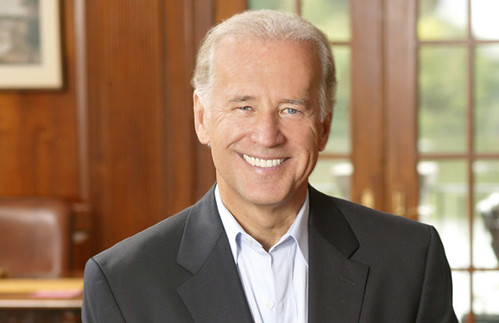
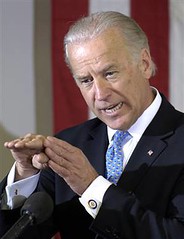
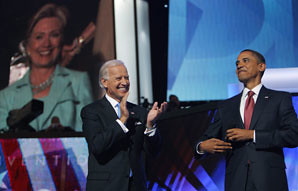
Joe Biden, le joker d’Obama


On a beaucoup parlé, sur ce blog et dans les médias, de Barack Obama, et assez peu de son colistier Joseph Robinette (!) Biden. Mais pour traiter de la politique internationale des Etats-Unis, il faut impérativement s’intéresser au deuxième homme de l’Etat, Vice-président et grand ponte des affaires internationales américaines, dont l’influence sera significative sur la conduite des US, notamment parce qu’il a obtenu cette position dans la campagne justement afin de crédibiliser Obama en la matière et parce que les veeps (Cheney en est la meilleure illustration) sont tout particulièrement responsables de la diplomatie, cet aspect considéré comme secondaire par bien des américains.

Un homme d’expérience

Joe Biden à 66 ans, est ce que l’on pourrait appeler un vieux routier de la politique américaine. Il a été élu pour la première fois en 1972 à l’age de 29 ans, c’est son sixième mandat successif de sénateur du Delaware, un petit état coincé entre la Pennsylvanie et le New Jersey. Il a donc passé la moitié de sa vie au Sénat!

Une qualité majeure de ce professeur en droit constitutionnel: sa maîtrise des enjeux internationaux. Depuis longtemps on n’avait pas vu à la tête des Etats Unis un homme d’une telle expérience : Président pendant plus de huit ans de la très puissante commission des affaires étrangères du Sénat, Il est respecté bien au delà de son propre parti.

Après s'être fortement engagé dans les guerres des Balkans et notamment en faveur des Bosniacs (pour la levée de l'embargo sur les armes), ila notamment été en 1999 à l’origine de la célèbre résolution qui confiait à Bill Clinton toutes les forces nécessaires pour gérer la crise du Kosovo. Le co-auteur de ce texte était à l’époque un sénateur républicain du nom de… McCain. Joe Biden est aussi l’un des premiers hommes politiques américains à s’être élevé contre la création de la prison de Guantanamo et il en a plusieurs fois demandé la fermeture, la qualifiant de “honte” pour son pays.
"Lorsque je réfléchis à ma carrière d'homme politique, je suis particulièrement fier du travail que j'ai accompli pour mettre fin au génocide dans les Balkans et pour faire adopter la loi contre la violence à l'égard des femmes", résume-t-il dans son autobiographie.


Le ticket gagnant

A 66 ans, l’homme politique américain le plus reçu a l’étranger ne passe environ qu’un tiers de son temps aux Etats-Unis - et encore récemment médiateur en Géorgie - jouit d’une crédibilité peu commune qui a fait de Joe Biden le meilleur partenaire du candidat Obama, auquel on reprochait son inexpérience. Il a été et restera la caution du jeune président en matière de diplomatie. Il sera aussi et surtout, le patron d’Hillary Clinton. Il faut le noter lorsque l’on s’interroge sur le rapprochement des concurrents à l’investiture dont les différents avaient pu sembler irréparables: Hillary Clinton, forte notamment de l’image de Bill au Proche-Orient, sera le sherpa américain dans le reste du monde, la responsable de la diplomatie. Et d’aucuns s’interrogent sur l’identité du véritable patron des affaires internationales. Mais les contre-pouvoirs internes à l’administration sont nombreux. On ne peut négliger notamment le rôle des services de renseignement et le pouvoir de l’armée. Biden lui, pourra superviser l’ensemble de ces services, là ou la diplomatie d’Hillary ne peut pas tout.Évidemment Biden traîne aussi un certain nombre de casseroles: il a par exemple voté en 2002, tout comme Mme Clinton, le Patriot Act : la loi qui a permis à Bush d’intervenir en Irak.
Libre penseur parfois aussi démagogue et électoraliste, il ne garde pas sa langue dans sa poche; un avantage pour le vice-président, souvent chargé d’attaquer l’adversaire politique, mais qui pourrait se retourner en l'occurrence contre son maître.


La Biden Touch

Catholique et fils d’ouvrier de Baltimore, il est l’incarnation des democrats de l’Est : les “blue collars”. Natif d’une région en déclin industriel, la Rust Belt (ceinture de rouille), Il est lui aussi hégérie du rêve américain: parti de rien, aujourd'hui vice-président. Il n’a pas de fortune personnelle: il est le moins riche des sénateurs. Autant d’arguments de proximité d’avec l’Amérique moyenne, pour le moins paradoxal puisqu'on taxait Obama d’intellectuel.
Il est un démocrate centriste, favorable à l’avortement, à l’union civile des homosexuels, au contrôle stricte des hedge funds et les private equity funds dont il dénonce la responsabilité fondamentale dans la crise économique, favorable à la taxation forte des hauts revenus et aux investissements étrangers dans l’économie américaine: ce qu'on apelle les fonds souverains saoudien et chinois ; mais favorable aussi à la peine de mort et à la vente (contrôlée) des armes à feu, grand défenseur des droits d’auteurs et de la propriété intellectuelle, il s’attache à faire bouger les lignes à Washington malgré sa grande expérience du système sénatorial et ne ternit en rien l’image réformatrice de la nouvelle équipe. Sa la liberté de langage a conduit à certaines gaffes célèbres de la campagne.

C’est ce contraste de progressisme et de classicisme, ce côté bavard et proche de la vox populi (et parfois même populiste), que les médias américains qualifient de Biden Touch. Un « nouveau » visage démocrate (lisez l'article sur le reste de l'entourage présidentiel) dont il faudra observer attentivement l'ambiguïté dans les prochaines années.

samedi 22 novembre 2008

les Guerres Américaines: que peut Obama?

La rencontre avec Ali Fathollah-Nejad, nous a permis d'aborder la politique internationale américaine selon deux axes interdépendants. Vous avez pu lire dans le premier article sur le sujet, les risques liés aux derniers jours de W.Bush à la tête de la diplomatie et des armées US, cette deuxième analyse traite des espoirs portés sur les premiers pas d'Obama sur la scène internationale, de ses marges de manœuvre, de l'influence qu'il aura en Europe et des développements possibles en matière d'engagements internationaux américains, notamment militaires et principalement dans le grand Moyen-Orient, coeur palpitant des mondes en transition.

Ali Fathollah-Nejad est expert des relation US-UE avec le Moyen-Orient: du Pakistan à l'Irak en passant par l'Afghanistan, l'Iran, etc.
2ème partie:

A Mere Atmospheric Change in Obama’s Foreign Policy

U.S. London-Based Pundits See Rather Continuity Than Change

By Ali Fathollah-Nejad

LONDON – After Barack Obama’s victory in the U.S. presidential elections last week, discussions about what direction an Obama/Biden Administration is likely to follow are gaining momentum.

Obama’s “Coalition of the Willing” Against Iran?

Invited by the London Middle East Institute (LMEI) on 11 November to speak about the foreign policy of the next U.S. administration, the London-based American analyst Jonathan Paris anticipated an Obama foreign policy much in line with the one of the current Bush administration.

The main areas of concern, he asserted, would be Afghanistan, Iraq, and Iran. Focusing extensively on the latter, Paris said that sanctions will be kept up with even the aim of aggravating those. Meanwhile, one should not “beg” Russia to join the efforts by the P5+1 – i.e. the five permanent UN Security Council members and Germany – to increase pressure on Iran. Rather would it suffice to wait for Russia to join an anti-Iran “coalition of the willing.” Moscow has so far been reluctant to Washington’s insistence to impose further sanctions on Tehran. According to Paris, who like Norman Podhoretz is an adjunct fellow at the neoconservative U.S. think-tank Hudson Institute, Washington’s overall goal would be to “win over” Russia so to avoid any opposition to its preferred policies.

Drawing on Obama’s campaign announcement to enter into direct negotiations with Iran, Paris stressed that this would test the Iranian Supreme Leader Ayatollah Khamenei’s willingness to come along. Although proponents of a thus-designed “overture” vis-à-vis Tehran expect the Iranian leadership to repudiate, other experts point out that such an outcome is far from obvious with the Iranians being seriously interested in normalizing ties with the United States. Paris reiterated the view that Israel could only attack Iran with U.S. support.

Paris, a Middle East fellow with the Council on Foreign Relations in New York from 1995 to 2000, stated that other spotlights would be Pakistan – which he described as constituting the “prize” –, “the most pivotal state in the Middle East,” Egypt, with President Hosni Mubarak’s succession pending, and Iraq where “corruption” of the Baghdad government would be the core problem without mentioning Obama’s promise to withdraw occupation forces there. While tackling the so-called “rogue states,” of course China would be a central focal point for Washington’s foreign policies, Paris added.

Multilateralism “Yes,” Multipolarity “Not So Fast”!

Paris, who is also a member of the International Institute for Strategic Studies (IISS) in London, said a future president Obama would opt for “cooptation” rather than confrontation, a characteristic attributed to the Bush Administration. He classified an Obama Administration as belonging to a “liberal internationalist” strand. While Paris approved multilateralism, he cautioned against multipolarity whose dawn he commented with occurring “not so fast.”

He described the decision-making process of the forthcoming administration to be “bottom-up,” implying that Obama will be very much acting upon advise given to him. Paris conceded that only “atmospheric change” would come during an Obama presidency.

A few days earlier on 5 November, Mark Fitzpatrick, at a panel on “nuclear futures after the U.S. elections” at the School of Oriental and African Studies (SOAS) in London, stated that establishing a weapons-of-mass-destruction free zone in the Middle East could not be found among the top-ten list of an Obama administration. Fitzpatrick, an American senior fellow for non-proliferation at the IISS, said that the main obstacle to launching a regional conference to such an end would be the lack of “mutual recognition” between Israel and Iran. However, he did not mention Iran’s “grand bargain” offer of spring 2003 to the U.S. which inter alia included a de facto recognition of the state of Israel. Washington at that time ignored this remarkable Iranian overture that included Tehran’s willingness to settle all controversial issues in U.S.–Iran relations.[1]


Fitzpatrick presaged that a future president Obama would command U.S. marines in the Persian Gulf to start communicating with the Iranian navy in order to avoid any confrontation provoked by misperceptions. In terms of nuclear disarmament, he proposed that in the first 100 days of the new administration, the U.S. could de-alert the status of its nuclear arsenal, but preferably doing so only when Russia acts likewise.

In sum, both London-based U.S. analysts did not signal any change of an Obama administration’s foreign policy stance especially when compared to the Bush administration’s second term. Their remarks implied that the U.S. National Security Strategy (NSS) of 2002 and 2005 which formed the basis of President George W. Bush’ s foreign policy agenda and which included the Bush/Wolfowitz preventive strike doctrine would not be revised. According to veteran U.S. Middle East expert William R. Polk the removal of the George W. Bush’s NSS, which “threatens Iran with destruction,” would be an absolute prerequisite for any serious change in Washington’s world policy.[2] The American pundits rather upheld the belief that there will be continuity in Washington’s strategic outlines and actual policies with Obama and that the only change that could be expected will occur in terms of rhetoric.


[1] See Gareth Porter (2006) “Burnt Offering. How a 2003 secret overture from Tehran might have led to a deal on Iran’s nuclear capacity—if the Bush administration hadn’t rebuffed it,” The American Prospect, Vol. 17, No. 6 (June), pp. 20—25.

[2] See Ali Fathollah-Nejad (2008) “Iran Falling into the “Net” of a “Worldwide Policy”: On the U.S. Foreign Policy Doctrine and Its Present Dangers – Exclusive Interview with William R. Polk,” Global Research, 16 October.


vendredi 21 novembre 2008

La politique internationale Americaine: Rencontre avec Ali Fathollah-Nejad

Ali Fathollah-Nejad est un jeune chercheur londonien (M.Sc. cum laude, M.A., B.Sc., B.A.) en politique internationale spécialiste des relations des États-Unis et de l'UE avec le Moyen-Orient.

Allemand d'origine iranienne, il étudie en France, en Allemagne et aux Pays-Bas, puis fonde le think-tank international CASMII, et poursuit désormais ses recherches à Londres.

Il publie en anglais, allemand, français, turc, espagnol, italien et farsi, notamment: une étude sur le conflit américano-iranien: Iran in the Eye of Storm – Backgrounds of a Global Crisis. Il nous expose en deux articles, les risques liés aux derniers jours de W. Bush au pouvoir puis relativise les espoirs que font naitre les premiers pas d'Obama sur la scène internationale, au vu de ses déclarations post-électorales, de ses promesses de campagne (par exemple la fermeture de Guatanamo), mais surtout connaissant sa ligne politique personnelle et l'influence de son entourage, dans la ligne idéologique et pratique de la nouvelle administration.

I have said repeatedly that I intend to close Guantanamo, and I will follow through on that. I have said repeatedly that America doesn't torture. And I'm gonna make sure that we don't torture. Those are part and parcel of an effort to regain America's moral stature in the world.
Barack Obama Interview on CBS , 16. November 2008

1ère Partie:

Desperate Need for Serious Change in Transatlantic Foreign Policy

Almost eight years of the Bush/Cheney Administration have plunged the world into a deep political, economic, and moral crisis, whose overcoming will probably require decades if a sharp turn does not immediately take place. That is why the newly elected Obama/Biden Administration must bring about serious change.

After having lost the popular national vote against Democratic contender Al Gore in late 2000, the son of former U.S. president George H. W. Bush (1989–93) was heaved into office by a highly controversial Supreme Court ruling that granted him victory in the all-decisive ballot in the state of Florida where his brother Jeb acted as governor.

George W. Bush's administration took office on the assumption that Washington's overwhelming military dominance will enable the "sole remaining superpower" to boundlessly project power into every corner of the post-Cold War globe. The ascending Weltanschauung of neoconservatism replaced the "Evil Empire" rhetoric of the Reagan years by promulgating the calamitous "global war on terror" with the largely Muslim "Greater Middle East" as its center stage. The terrorist attacks of September 11, 2001 allowed the militarist agenda of the "Bush/Wolfowitz Doctrine" to unfold its full destructive potential in the invasions and occupations of Afghanistan (in Oct. 2001) and Iraq (in March 2003) under the pretext of fighting terrorism, stopping the spread of weapons of mass destruction, and promoting democracy. The world would soon learn that all those noble causes were not only highly hypocritical, but the outcome produced would be in stark contradistinction to those proclaimed aims.
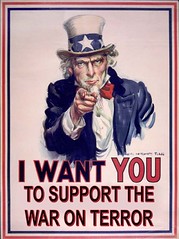
In his second State of the Union address (Jan. 2002), George W. Bush justified his administration's "war on terror" as being directed against an "axis of evil," allegedly "arm[ed] to threaten the peace of the world." This notion evoking the good fight against the fascist "axis powers" during the Second World War paved the way for the neocon-designed "World War against Islamofascism." These crude concepts would heavily disrupt international relations for years to come.

When George W. Bush and his hyper-influential vice-president Dick Cheney ran for re-election in 2004, the moral bankruptcy of the self-proclaimed "war president" was already all too evident: Guantánamo, Abu-Ghraib, Fallujah, and Bagram became synonyms of atrocities committed by the self-appointed torchbearer of democracy and human rights. In the wake of the USA Patriot Act (Oct. 2001), the transatlantic world, too, had to witness an unprecedented hollowing of its civil rights fabric for the doubtful sake of "fighting terrorism."

To finance its global adventures, Washington effectively borrowed huge sums from the world, prompting the biggest budget deficit in U.S. history, and further greatly contributed to the economic and financial breakdown that we witness today.

In politico-strategic terms, the transatlantic world had to pay a high price for misguided U.S. policies and the lack of an independent and potentially corrective EU policy stance. Europe's highly important neighboring region, the Middle East, is aflame as a result of one-sided, blind, and overtly imperialist interventions whose outcome few dared to foresee. Meanwhile, Latin America has slipped away from U.S. hegemony, and Asia has entered an active process of alliance building to counter Washington.

The idea that the United States, together with its willful European allies, is in pursuit of a selfish and cataclysmic agenda has only been fortified in the opinions of a vast majority of world's populations. Therefore, President Obama will not succeed by merely trying to cosmetically repair this abysmal image of the "West." He must decisively abandon unilateralism for the sake of multilateralism and replace imperial arrogance by a global vision of overcoming the planet's growing maladies. Europe's reputation as a responsible actor in world affairs will much depend on her ability to encourage Washington to make the necessary adjustments.
The world, including Americans and Europeans, is in desperate need for a swift and serious change of the transatlantic world's attitude towards the most pressing problems of our time. It is time to rethink the very fundaments of the policies pursued so far and to establish a rational policy, which, instead of proliferating enemies, explores avenues leading to mutually beneficial partnerships. Instead of thoughtless reliance on "coercive diplomacy" which has led to a vicious cycle of escalation (e.g. in the conflict with Iran), negotiations need to be undertaken in "good faith," foremost taking into account the other parties legitimate (security, political, economic) interests. Only this would give credibility to the West's handling of world affairs.

A full reactivation of the UN Charter's authority is all the more crucial as its blatant circumvention by the United States has virtually prompted emerging great powers to follow suit, with the result of ever-growing global crises that have become hardly manageable by the international community. Likewise it should be clear to policy-makers that any use of double standards is being attentively registered around the globe with a growing sense of alienation and mistrust, which only creates detrimental, counter-productive effects for the future of global governance.

For the time being, until Barack Obama's inauguration in January, American and European decision-makers would be well advised to undertake every necessary step to dissuade the current Bush/Cheney Administration from deepening the Middle East quagmire by launching another preventive war against its proclaimed Iranian archenemy -- a war which veteran U.S. foreign-policy expert William R. Polk, in his interview with me last month, characterized as a "great and present danger."

Polk, in the same interview explained that, although Obama's change of position on the Middle East was "lamentable and disturbing," "we can hope with Obama." So, let's hope he recollects the very promising ideas with which he entered the presidential race and which would potentially bring serious change.

That's the question developed in the next article.


jeudi 20 novembre 2008

De Sans-Papier à Citoyen : rencontre avec Jorge Sanchez

suite et illustration de Minorités et Abstention

Nous voici en compagnie de Jorge Sanchez, en version originale, accent "mericain".

Jorge est en effet d'origine mexicaine. A 15 ans il a quitté son pays natal pour venir travailler en Californie. Immigré clandestin, il a fait partie des centaines de milliers de mexicains qui, chaque jour, risquent leurs vies à travers le désert à la recherche d'un avenir meilleur.
dessin de plantu, Le Monde le 15.03.07

Après plusieurs années difficiles, Jorge a réussi à obtenir la nationalité américaine: ici, on peut encore devenir citoyen. Il a ainsi pu poursuivre des études en informatique. Bosseur, talentueux, doué d'une volonté sans égal, un destin d'immigré, aujourd'hui il travaille dans une des plus grandes compagnies d'information financière du monde, basée à New-York. Un cas fréquent aux États-Unis, ou le mérite fait parfois sens en sus de la reproduction sociale.


Fier de ses racines et au fait des difficultés de la minorité latino, il consacre des temps libres à travailler dans un centre social d'aide aux immigrés clandestins. On remarquera qu'Obama, longtemps travailleur social des quartiers chauds de Chicago , s'est beaucoup entouré de ses pairs.


Je le retrouve dans le cadre de nos rencontres avec des associations américaines politisées. Il m'explique qui il est, pourquoi il s'est engagé auprès de Barack Obama, et dans cette dernière partie, dans quel sens vote la communauté, notamment à travers le prisme de l'immigration et de l'intégration, et quels sont les risques d'abstention.


merci Jorge!
logo Obamania